
Whether prepping your bug-out bag with non-perishable snacks or finding an easy way to preserve your game meat, making pemmican with game meat is a great way to use any extra game meat.
Pemmican is a dense mixture of rendered fat and protein with an incredibly long shelf life. Making pemmican with game meat is a simple and fun family activity.
Learn about the history of pemmican, some common pemmican recipes, and why it's regaining popularity throughout North America and Europe.
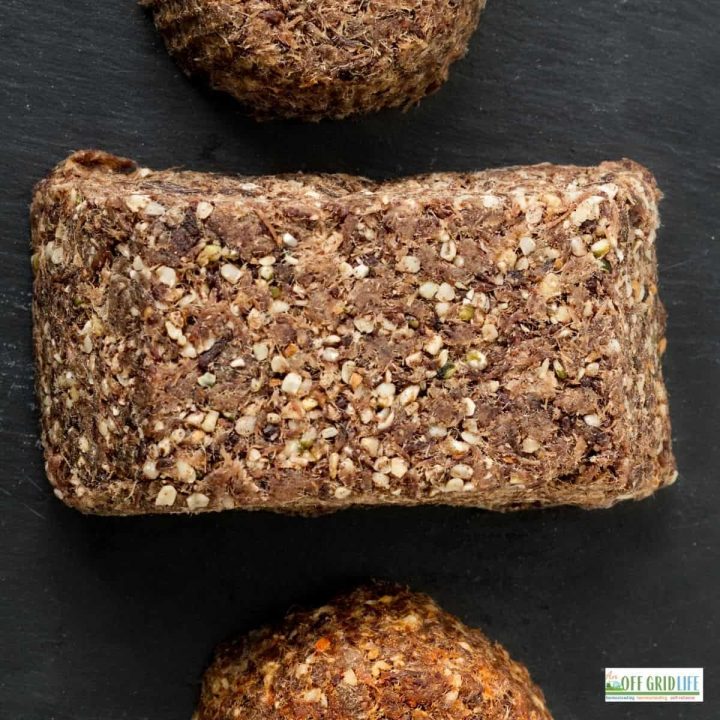
Table of Contents
I first heard about pemmican as a kid in northern Ontario, when my dad talked about old trail foods and how people carried food before freezers, fridges, and grocery stores. Years later, when we lived off the grid in Canada's far north and homeschooled our kids, pemmican came up again during Canadian Studies.
Learning about making pemmican from game meat is a fun history exercise, true. But it's also a practical lesson in using what you have, wasting less meat, and thinking ahead.
How to Make Pemmican With Game Meat
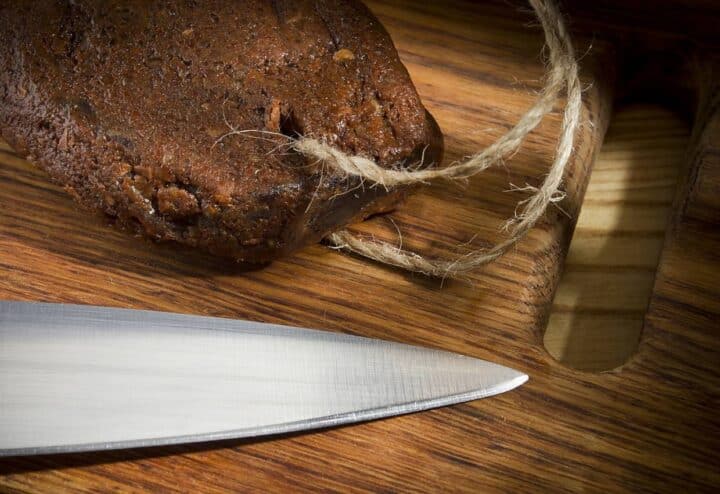
Making pemmican starts with lean meat and clean prep. Keep the process simple, and don't rush the drying step.
⬇️Want the printable recipe card? It's at the bottom of this post.⬇️
What is Pemmican?
Pemmican is a mixture of meat and animal fat, usually made from elk, bison, caribou, deer, or moose. Similar to jerky, you must use dried meat with the fat removed. However, remember to keep the fat.
When making pemmican, you'll need to render it down and add the rendered fat back into the meat mixture.
Depending on your preferences, try adding dried berries or unsalted nuts to your pemmican recipe. And check out the site Alderleaf Wilderness College for some great pemmican recipes for inspiration.
However, take note. Adding extra ingredients to the meat and fat will reduce pemmican's shelf life. Kansas State University Extension explains that when you're dehydrating meat safely at home, you need to use clean tools, keep meat cold before drying, slice meat thin, and avoid rushing the drying process because trapped moisture can cause spoilage.
Wild game meat isn't the only wild food to dry and keep in your survival stash or prepper pantry.
Learn how to make smoked fish or dried fish at home and preserve your catch for the future. Or learn how to can fresh fish to add some variety to your off-grid food supply.
Where Pemmican Comes From
The word "pemmican" comes from the Cree word "pimikan." And according to the Encyclopedia Britannica, the Cree word means "manufactured grease."
Traditionally made from dried buffalo meat that was then pounded into powder, pemmican has been a staple food for many native Americans and indigenous tribes over centuries.
The high-energy food was adopted by the European fur traders and explorers as they spread across North America.
The Perfect Survival Food
Facing harsh winters and unforgiving land, pemmican was an important food well into the 19th century for native tribes, the Métis people and even the US army.
In an age before drive-thru fast-food joints and convenience stores, carrying meals while traveling on foot or by canoe through the great outdoors wasn't easy.
So pemmican, a nutritious food made with dry ingredients, lightweight and easy to carry in thin strips was the perfect food for long trips. It is said to have prevented the starvation of many. In fact, arctic explorer Robert Peary mentioned packing pemmican with dry berries in his 1917 book, The Secrets of Polar Travels.
Because of its density and long shelf-life, pemmican, like hardtack(aka survival bread), was easy to transport in canoes or in a pack over huge distances.
So, as a result, it was used for hundreds of years to supply crews on long journeys across the globe. This included expeditions to the North Pole and through the heart of Africa.
Note: If your kids study pioneers, homesteading, or westward expansion as part of their homeschool, why not learn how to make pemmican recipes from game meat?
What Was the Pemmican War?
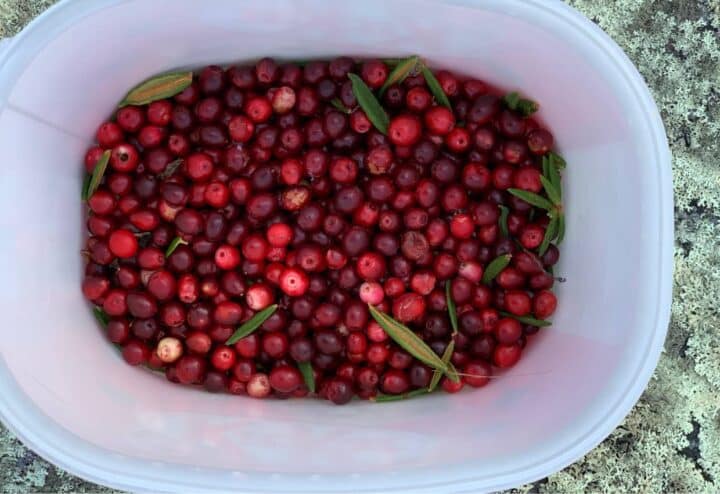
Pemmican was critical to the survival of North America's early explorers and traders. In fact, it was so important that there was an entire war fought over it. The Pemmican War (1812 - 1821) was a series of skirmishes and battles between the Hudson's Bay Company and the North West Company.
The main issue was regarding pemmican exports and trade, coming to a head at the Battle of Seven Oaks and the burning of Fort Douglas and Fort Gibraltar. By 1821, the two rival companies merged, swiftly ending the almost decade-long confrontation.
Why is Pemmican Still Popular?

With refrigeration and a variety of other preservation methods available today, you might wonder: do people still know how to make pemmican? Yes! It's actually experiencing a resurgence in popularity as preppers and homesteaders embrace the traditional way of living. Or prepare for a survival situation.
Now, more than ever, more and more people worry about food shortages and their family's food supply. To secure their food supply, people have a renewed interest in pursuing survival and homesteading skills.
They're raising rabbits for meat, keeping chickens, and growing gardens to feed a family
They're foraging and preserving food through pickling, smoking meats, or fermenting foods.
And they're considering the shelf-life of the food items used to stock their pantry.
Tip: Add "making pemmican" to your Winter Homestead Checklist. That way you'll always have access to a supply.
Why Pemmican Appeals to Preppers
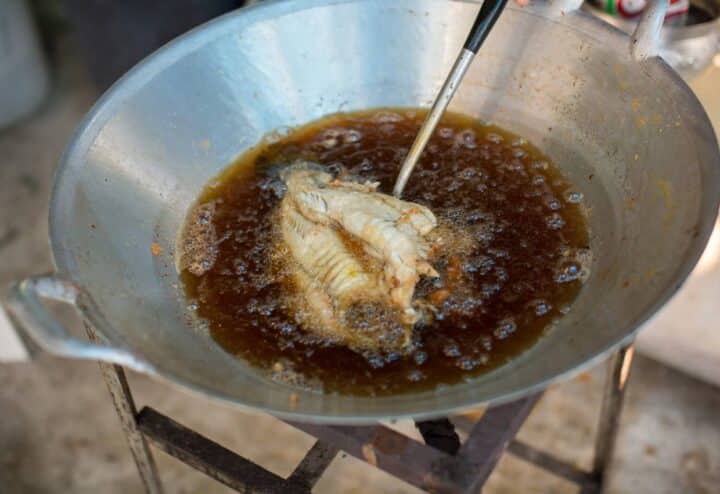
Making pemmican with game meat gives you a reason to use up those less desirable cuts of meat. You know, the ones that might otherwise go to waste. And it only takes minimal preparation. So little that a basic pemmican recipe can be made in the woods over a fire.
Plus, like most dried meat, the shelf life of pemmican can be anywhere from a few years to a few decades. That's why pemmican has become more popular among preppers as the ultimate survival food.
Pemmican for Long-Term Food Supply
When I think about pemmican as a food storage skill, I don't put it in the same mental bucket as quick snacks or modern protein bars. Pemmican works best as a serious backup food. It's dense, plain, and made for energy, not fancy eating.
Here's what matters most when you make pemmican at home.
- Use the leanest game meat you have.
- Remove every bit of visible fat from the meat before drying.
- Dry the meat until it snaps or crumbles.
- Grind the dried meat as fine as you can.
- Render the fat slowly and strain out the solids.
- Start with equal parts dried meat powder and rendered fat by weight.
- Keep berries, nuts, and herbs optional because they may shorten storage life.
- Store finished pemmican in a sealed container in a cool, dark, dry place.
Related: How to Store Your Harvest Without a Root Cellar
Storing Pemmican

Squares are better for storage and maximize space more efficiently if you're going to be carrying them in a pack. As with any dried meat or preserved food, make sure you store it in an airtight container in a cool, dark, dry place for long periods.
When you're moving, eat pemmican in small pieces with dried fruit. It's fine at room temperature.
Pemmican: The Ultimate Survival Food Video
It's no wonder pemmican still ranks near the top of the list of ultimate survival foods. Making pemmican with game meat was how indigenous tribes and explorers traveled long distances. They moved across the continent without running out of food.
Preparing and storing pemmican is easy. Plus, it's a very useful bushcraft skill to learn. After hunting season this fall, try making some with the family and store it in your cellar for years to come.
Pemmican FAQs
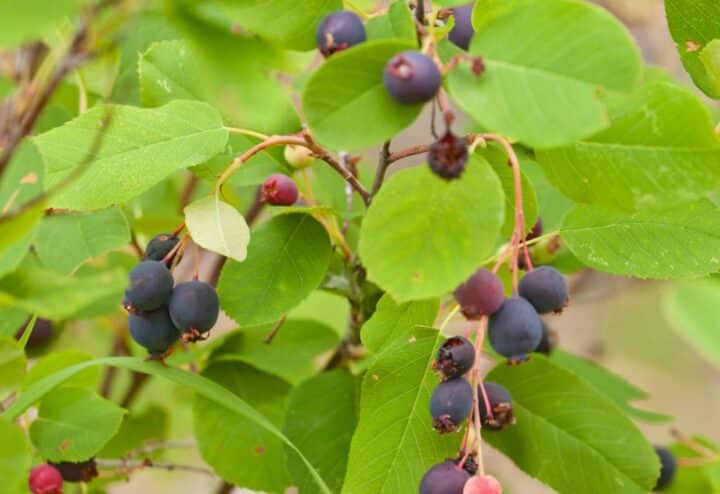
Got questions about pemmican? We have answers.
What is pemmican?
Pemmican is a traditional Native American food that combines lean, dried meat with rendered fat and sometimes berries. It's a high-energy food known for its nutrient density and long shelf life, making it ideal for long-term storage and survival situations.
How long does pemmican last?
Properly made and stored pemmican can last for several years without refrigeration. The key to its longevity is the removal of moisture and the use of a rendered fat mixture, which acts as a natural preservative.
Is pemmican safe for everyone to eat?
Pemmican is generally safe for most people, but if you have dietary restrictions or food allergies, particularly to meat or fats, consult a healthcare provider before consuming. It's also high in calories, so consume in moderation.
Can I add spices or herbs to my pemmican?
While traditional pemmican is simple, you can add spices and herbs for flavor. However, be cautious as some ingredients may reduce the shelf life. Stick to dry spices over fresh to maintain longevity.
This post is part of the Homestead in Your Homeschool Series.
You might also like...


How to Make Pemmican
Use this classic pemmican recipe to make your own homemade pemmican. You can add additional flavors as desired.
Ingredients
- When preparing pemmican, try to use the leanest cuts of meat possible. Large game animals such as deer, elk, moose, or bison are preferable. However, use beef if necessary.
- If you have any fat left from harvesting the animal, use that. If not, talk to your local butcher and buy some rendered beef or pork fat.
- Rendered beef or pork fat, or fat from the animal. Use a 1 to 1 ratio of fat to dried meat by weight.
Instructions
- Begin by slicing the meat thin, no more than ¼ of an inch thick. Kansas State University Extension says slice meat no thicker than ¼ inch and trim fat to reduce rancidity. It also warns not to raise the drying temperature to rush the process because that can cause case hardening and trap moisture inside the food.
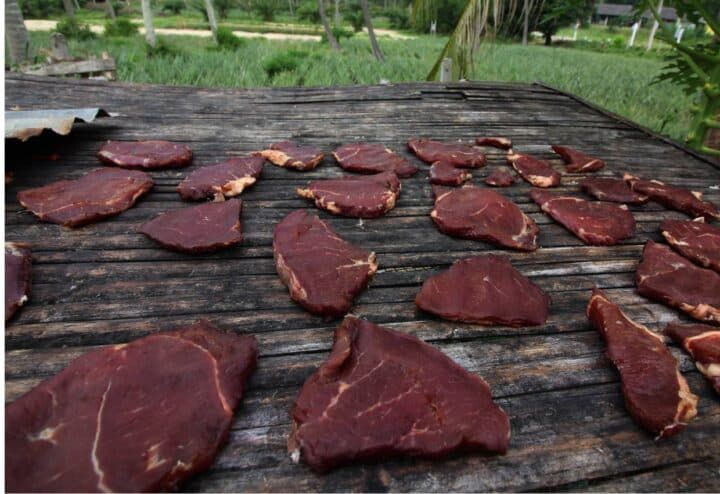
- Remove any fat left on the meat, and then dry it by hanging it over a fire, in the sun, in a dehydrator, or in an oven. Hanging the strips on thin branches or racks a few feet above a fire is the traditional way, but it can take over 12 hours to completely dry. Before you start drying meat, follow the basic USDA food safety steps: clean your hands and tools, keep raw meat separate from other foods, use a thermometer when needed, and chill foods promptly.
- Once fully dried out, pulverize the meat into a powder. With modern conveniences, you can use a food processor or grinder to mill it into a fine powder. Alternatively, you can use a mortar and pestle or simply crush it repeatedly between stones. Although more labor-intensive, this step can be completed by hand. And if you are adding berries to your recipe, they need to be dried and pulverized as well.
- Prepare the fat separately by rendering it in a pot over low heat until it stops bubbling.
- Drain it through a strainer to remove any solids.
- Place your powdered meat and any extras you’ve added into a mixing bowl or casserole dish, and very slowly add the rendered fat. Begin with a 1-to-1 ratio of fat to meat. As you pour, the powder will absorb fat, so make sure you spread it evenly throughout the mixture and that it does not become too runny.
- Once the fat has absorbed into the powder, let the mixture sit for a few hours as it cools and firms up. You can form the mixture into squares or balls for storage.
Nutrition Information
Yield 12 Serving Size 2.5 ozAmount Per Serving Calories 115Total Fat 6gSaturated Fat 2gTrans Fat 0gUnsaturated Fat 3gCholesterol 44mgSodium 32mgCarbohydrates 0gFiber 0gSugar 0gProtein 14g

Hi Carolyn! Great question. Start with equal parts of each, so 1 to 1 ratio of fat and meat. But depending on the animal harvested, you may find you need to add a bit more fat. It also depends on if you're adding berries or not. It's better to err on the side of maybe-a-little dry than maybe-a-little-too-much fat. If it's dry, you can always add a bit of warm water or just chew it a bit more!
My husband keeps asking me to make pemmican so here I go! Do you have an estimate on how much each of the meat and fat to combine? Thank you!
Hi Kim! I remember my dad telling me about pemmican as a kid growing up in northern Ontario. Then I read about it with my kids when we were covering Canadian Studies in our homeschool, and my son Blake was so fascinated with it he wrote about it! Glad you enjoyed the post.
Thanks for the comment, Dianna. Let us know how it turns out!
This was such an interesting post. I have never heard of pemmican before and now I am intrigued. I can't wait to try making it.