Spring is in sight! That means it's time to update my Spring To-Do List.
Now I know that my list probably looks a little different than yours. Even if you live off the grid as we do, no two off grid home setups are precisely the same.
And since we live pretty far north, our springs are short - just two weeks long. But then, we do get several months of gloriously long summer days (about 20 hours of sunshine) to enjoy.
So in the spring, we're basically assessing any damage that has to be taken care of during the short summer months.

Off Grid Home Spring To-Do List
Our off-grid spring to-do list is short because our spring is short.
Note: this post was originally written in May 2018 and updated in 2019, 2020, 2024 and 2025.
Adjust The Solar Panels
In our area, during the winter months, the sun remains quite low over the horizon. So, in November, Dan climbs up on our roof to adjust the solar panels to capture as much sun as possible.
From late November through most of January, we only get between four and five hours of good sunlight. By April, the days have lengthened. Dan climbs back up on that slippery roof to adjust the panels again. This year, he had to shovel snow off the roof to clear a path he could walk along.
Read More: Living Off Grid In Winter: How We Prepare
Tune-Up Our Generators
Update: February 2024 - our Tesla 2 Powerwall, solar panels and Kubota diesel generator arrived in late 2022. Watch out for my review coming in the spring of 2024.
Update: February 2021 - although our new generator shed was built in the summer of 2021, all the travel restrictions and delays that started in 2020 mean our new generators and solar panels have yet to arrive.
Our generator shed used to house three generators. Two 10 kW diesel Lombardini generators. And a newer, portable gas generator.
The newer generator was the main generator for the house for many years. It got us through part of the first winter, then died a slow death.
Luckily, the older generator that we keep as a backup fired right up. Until it didn't. That's why we now have a portable gas generator.
This year's off grid Spring To-Do List includes replacing the main Lombardini with a new-to-us Lombardini.
Update 2022: We replaced it with a new Kubota!
Check Our External Water Pipes and Pumps
We are fortunate to have a wonderful water source right in our backyard - a huge, clear lake. And our off grid water system includes a pump submerged 14 feet down, and 225 feet of insulated water pipe.
We pump water all through the year (yes, we pump water in winter) and store it in a 1500-gallon homemade water tank just off our front entrance. So in the spring, we check the pipe and line for any cracks that need to be repaired before it gets cold again in September. We'll also run a water test.
Update: January 29, 2019: This past summer, our water tank sprang a leak. Actually several. The tank sits in a room off the side of our front entrance. It's made of two large pieces. The leaks sprang up where they join. As it's over 30 years old, we suspect it's time to replace the sealant. So we're adding that to our spring list.
Update May 1, 2020: The Coronavirus restrictions have made us ramp up our self-reliance efforts. We decided to install a water filtration system on our kitchen tap so we can drink the water directly from the tap.
Sweep The Wood Stove Chimneys
This one is pretty straightforward. We have a large wood stove in our great room that we keep loaded with wood 24/7 from mid-September through mid-April. Dan climbs up to the room and cleans it out.
We also have a wood stove in our separate garage that should be cleaned out, but we didn't use it this year, as a new garage/storage building is in the near future.
Update February 2021: We're slowly working on this one and decided to keep the garage we have. However, it does need a new roof.
Top Up Our Batteries
Our battery bank includes 12 deep-cycle batteries. In the spring, we add distilled water, which is recommended to help maintain deep-cycle batteries. We may change our battery bank setup this summer if time permits.
Update: 2021 - we no longer need batteries as we now have a Tesla 2 Powerwall. Note - not a fan of using the Powerwall as a main power source for full-time off grid living in the far north.
Pump Out Our Poop Tank
Although some of our friends who live off the grid have composting toilets, propane toilets, honey buckets, or old-fashioned outhouses, our off grid toilet situation might surprise you. Yup, we have a traditional toilet setup. The waste gets collected in a 2500-gallon tank under our home.
Twice a year (sometimes three times, depending on how many visitors we get), we call Victor Crapeau (yup, that's his real name) to drive his tanker truck out to our place and pump out the tank. Easy peasy!
Bring Our Frozen Meat In From The Back Deck
Winters here are long and cold, often with temperatures dipping down into the low-30s and -40 degrees Celsius. So cold that we use our back deck as our freezer from October through April.
As the temperatures rise, we start bringing in our frozen meat and fish. This year we had venison stew, ptarmigan stew, rabbit stew, moose steak, caribou roasts, lots of frozen pike, plus some chicken and beef.
We cook up what we can and store the rest in the tiny freezer compartment of our fridge. The kids really liked it when we had to eat up the ice cream quickly because we were running out of freezer space.
Update May 1, 2020 - This year, we had record-setting cold temperatures (dipping into the low minus 40s and minus 50s for days on end), and there was a lot more snow than usual. As recently as last week, we were hitting the -20 Celsius mark. With the food shortages due to the restrictions, we've used up most of our back-deck freezer food!
Update February 2021: We're still using the back-deck freezer method with great success. This year, we also processed and froze 16 meat chickens to get us through the winter. In 2022, we processed even more, plus three huge turkeys.
Take Our Compost Bin Outside
Many homesteaders, country folks, and increasing numbers of gardeners living in cities and suburbs compost their waste to use in their gardens. We're a bit different.
Yes, we all compost all year round. In fact, one of our first off grid homeschooling lessons is teaching our kids how to compost. In the winter, we bring our bin indoors and keep it in our water tank room. It's cool in there and easy to access.
In April, Dan hauls it outside and uses a shovel to turn over the coffee grounds, eggshells, and assorted veggie scraps. Once the ground thaws a bit (early June), we'll work the compost into our beds.
Update: February 2021 - This winter was the first time that we kept chickens. That means we have lots of chicken-manure-filled straw to add to our compost beds when the ground is ready to work in June.
Start Our Indoor Seedlings
Here's one item on our off-grid spring to-do list that I'm still fine-tuning. If we start our seedlings too soon, they get leggy and thin before it's warm enough to plant them outdoors. And starting them early also means they don't get enough sun.
When we lived further south, we could put them under an indoor plant light. But here, we always try to minimize our power use in the winter.
We also spend time planning our garden to maximize our production. We're working out how much to plant to feed our family.
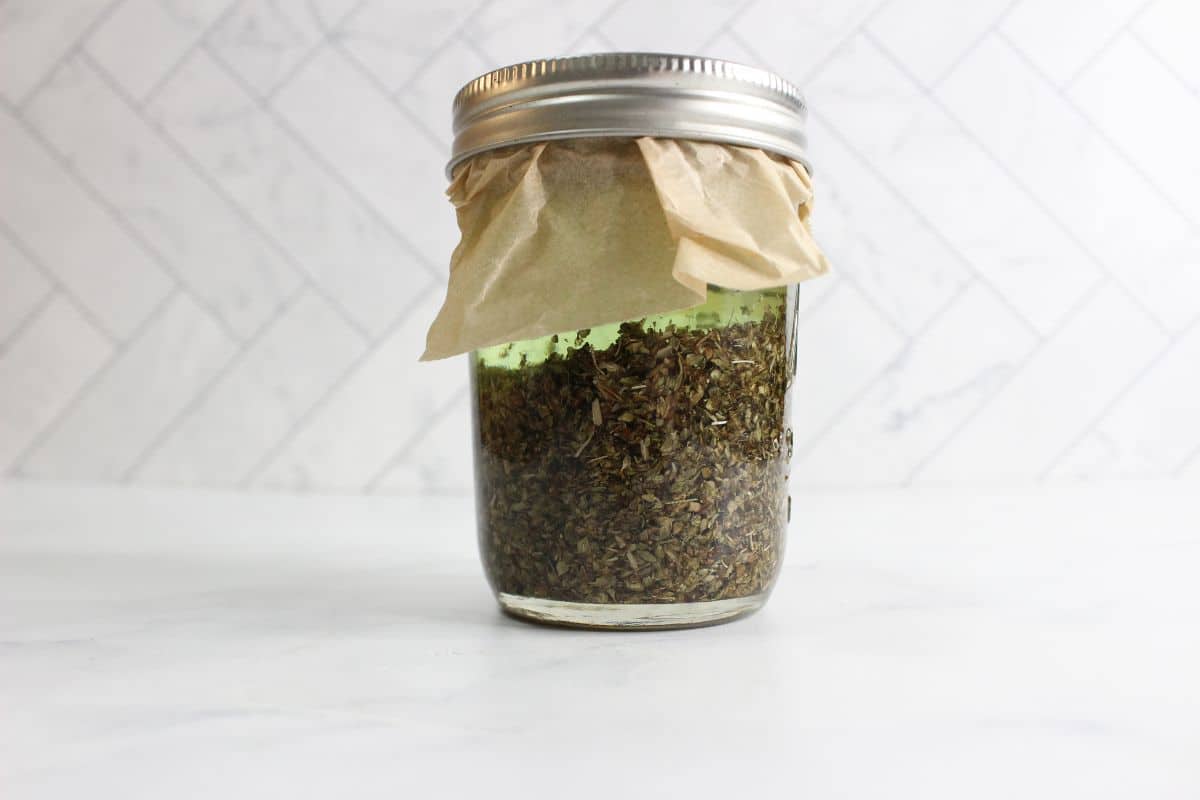
And we also plant herbs indoors (and lettuce) throughout the year. Each year our garden grows a little bigger, and this year we're going all out.
Update: February 2021: I'm just working out what we're doing for the garden this year. We've experimented a bit with cold frame gardening as we try to maximize our food supply.
Watch for an upcoming post dedicated to gardening off the grid. In the meantime, learn about some of the unique conditions gardeners in the north have to face.
Plan Our Main Summer Projects
And this is my favorite part of our spring off-the-grid to-do list. Planning what we'll do this summer based on what we've found during our spring assessments.
This year, we have several major homestead projects we'd like to do that we didn't get to last spring and summer. Our 2024 main projects at our off grid homestead included:
repairing the wood footings and foundation under our homebuilding a chicken coop and runexpanding our outdoor gardenreplacing screens on the back deck with windows to make a ¾ season living space- building a greenhouse with salvaged windows
- finishing our upper deck floor and adding new glass panels/rails
- repairing the broken wooden staircase leading down the rocks to our deck
- add a side deck
install new generator into shednew roof on our home (done summer of 2023)expand our chicken run to accommodate turkeys- create permaculture pockets in the rocky, sheltered, south-facing parts of the property
- repair cedar siding on main house and reseal and stain
Build a Chicken Coop
We got finally got chickens! Hopefully, they'll arrive in the next few weeks. We're keen to get started with some laying hens and meat chickens.Keep an eye out for pictures on our Instagram account.
February 2021 Update: Done!
We currently have 20 chickens and a rooster, and get anywhere from four to ten dozen eggs a week. At the moment,t our chickens include Western Rustics, Barred Rock, and White Lohmans.
Our chicken coop is well-insulated, and no, we don't have regular heat out there. However, when the temperature dips below 10C in the coop, we run a heat lamp for about 30 minutes to warm it up slightly. (One of us stays out there to keep an eye on it.) So far, so good.
Update Next Year's Off Grid Spring To-Do List
As we finish this year's tasks, we'll probably come up with things to take a look at next year. For example, now that we're getting the hang of chickens, we're adding turkeys in April. And possibly rabbits.
What's on your spring to-do list?
Like this pin? Save it to your favorite Pinterest Board for Later!



Thanks for sharing this with us at the Homestead Blog Hop, it was one of our features this week!
That's a great list. Each season has no end to to-do activities. I wish I was home to get going on mine at the float cabin, but right now we have to stay in the city due to the virus. Can't wait to get back to my home. - Margy
Wonderful list! Thank you for sharing this with us at the Homestead Blog Hop, it was chosen as one of our featured posts!
Sarita...I enjoy your entire website. I would so love to live off the grid. We have talked about it, but that cold weather is something we gave up when we left Iowa. Still, I would at least love to try it...maybe someday. Getting ready for summer down here is quite a bit different than the north. It gets so hot, I spend most of my time in the AC...which I hate, but my hubby doesn't want to relocate anywhere with cold weather. Another thing we have noticed about Florida; due to the sandy soil, it's very difficult to get good fruits and veggies, and the meat is somewhat tough. We think it's due to the lack of nutrients in the soil (or sand) that causes them to be lacking. There are also too many creepy-crawly things down here for me to even consider gardening, which makes me sad. Anyway, I enjoyed your post and envy you greatly.
Thank you for commenting Nikki! And I have to tell you, Alabama (or really anywhere south of here) sounds pretty good at the moment. Mid-late February is usually the toughest time for us because we start to get cabin fever when it's too cold to spend much time outdoors. By March the temps warm up to the -20 Celsius range (that's about -4 Fahrenheit) and we can do our outdoor winter activities like sledding, snowmobiling, skating, snowshoeing, etc. Until then, we hunker down by the wood stove!
Thanks for the comment Dawn - and also the suggestion! I didn't know about using a fan with tomato seedlings, but we may be able to do that when we run the generator. Worth a try.
I love that your septic guy's name is Crapeau! Too funny!!
Wondering with your seedlings if you could (and I don't know because you minimize power usage) run a fan on them several hours a day? It's something I do with my tomato seedlings because the constant breeze forces them to grow thicker and stronger. You do need to rotate them so all sides of the seedlings get the breeze, but it really helps.
I truly can't imagine living like you do, although in some ways it sounds so amazing! I bet you see some beautiful animals way out there though, which would be really neat.
I found this very interesting reading Sarita! I have never lived anywhere as cold as your area and now my home is in Alabama so you can't get much further south than that.
I am a farmers daughter but still its very different from your situation. I clicked over to read your "about" and I am so impressed. That takes a lot of guts to leave the corporate world for the unknown.
I look forward to hearing more about your updates this year.
🙂 gwingal
Hi there - thanks for the comment! New beehives - sounds exciting. We're actually getting warmer temps today (-23 Celsius) and that means snow for us too. Looking forward to spring!
Hi Magi!
Thanks for the comment. And yes, we actually have several LED grow lights, and a couple more waiting to get strung up. They keep us in lettuce and herbs through the winter and usually peppers too (this year the aphids won). You're right - they don't use much power. We also have a couple of Aero Gardens, which use just 26 watts apiece - perfect for our solar/generator situation in the winter.:)
Great list! I always find such good things to read at the Homestead Blog Hop! We practically live in Town compared to you 😉 I've always dreamed of an off grid property though. Have you looked into LED grow lights? Might they be more compatible with solar?
Sounds like you're ready, Sarita:)
We're dusting off this latest snow storm, but our list is being built for this spring. New beehives, landscaping and a she-shed are additional projects we have on top of our annual maintenance schedule-
Thanks for sharing!