

If you're planning to move off the grid, chances are you're probably working on a tight budget. And you may have even researched off grid costs like the price of an off grid solar system, generator, and battery bank. I did.
As a former banker, I love numbers, especially when it comes to money. So I researched, budgeted, researched again (and re-budgeted) to estimate the cost of moving off the grid.
Yet despite my best efforts, we ran across some expenses I hadn't foreseen.
After living off grid in Canada's North for 11 years, I can tell you that the biggest budget surprises didn't come from our solar panels. They came from keeping the house warm, repairing equipment, insuring a remote property, and getting basic supplies delivered.
Your costs will look different depending on your climate, house size, access road, and power system, but these are the expenses I'd investigate before buying an off grid home.
Table of Contents
Off Grid Costs to Watch For
| Off grid costs | What we experienced | What readers should check |
|---|---|---|
| Home insurance | High premiums because of our remote location, wildfire risk, wood heat, trees, and distance from a fire department | Request written quotes before buying |
| Propane | About $1,100 per month from mid-October to mid-April | Ask for at least one full year of fuel bills |
| Generator diesel | About $200 per month during the period described | Check fuel use, generator size, and winter run time |
| Firewood | About nine cords per winter and roughly $3,200 per year | Research local wood prices and delivery costs |
| Generator repairs | Several hundred dollars per service call, plus parts and shipping | Budget for maintenance, parts, and travel charges |
| Remote shipping | Sometimes $50 or more for small equipment parts | Test delivery costs using the property’s postal code |
These numbers reflect our experience in Canada's Northwest Territories and shouldn't serve as a universal off grid budget. Use them as a checklist of costs to research for the location you're considering.
5 Off Grid Costs We Didn't Foresee
If you're preparing to live off the grid, or even try homesteading off the grid, take note of these five costs that could bust your off grid budget.
1. Off Grid Home Insurance
As someone who has always lived within a 10-minute drive to a fire department or fire hydrant, I didn't realize that homeowner insurance for an off grid home can be an issue.
First of all, some insurance companies (at least in Canada, where we live),won't insure properties that are off the grid. For one, in some areas of Canada, like "unorganized townships", it's possible to build a home that doesn't meet the local building code. Because there simply isn't a local building code.
Some properties may include uninspected electrical work, homemade systems, or other features that don't meet an insurer's requirements, which can be stringent when it comes to off grid electricity.
Secondly, some off grid homes exist in areas not serviced by fire departments. And there may be limited access to a water source, which is a problem in the case of fire.
In our case, although our off grid cabin was insurable, it was SUPER expensive. And we didn't discover this until AFTER we bought the house.
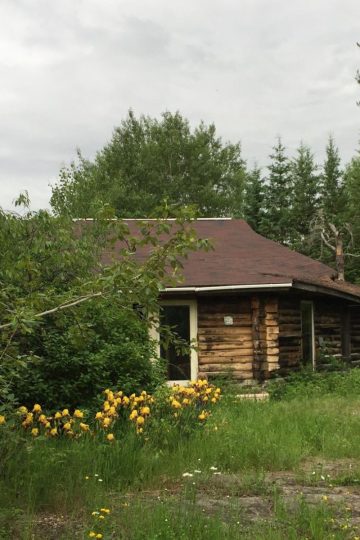
Although the home we bought was built to code, we live outside the service area of the closest fire department. We do, however, live on a lake. So there's a good water source nearby.
We also depend on our wood stove, along with a propane boiler and in-floor heating, for heat. And while we love the beautiful birch and spruce trees surrounding our home, they increase our insurance premium because they're a fire hazard.
This combination of factors means that homeowners' insurance makes up a hefty portion of our off grid costs.
How to budget for off grid home insurance
Call for a quote on off grid homes insurance for any off grid property before you buy. You'll be able to create a more accurate budget. And it will help you make a wiser financial choice between properties. Start with my complete guide to finding off grid home insurance, including the questions to ask before you make an offer.
2. Generator Repair Costs
When we bought this off grid property, we expected we'd have general maintenance costs associated with the two generators that came with it. But we thought our off grid costs would be similar to what we'd pay for a heating and air conditioning repair company in the city.
We weren't prepared when our generator wouldn't start. We soon learned that finding a good generator mechanic this far north is tricky - and expensive. (Just one of my many off grid living mistakes.)
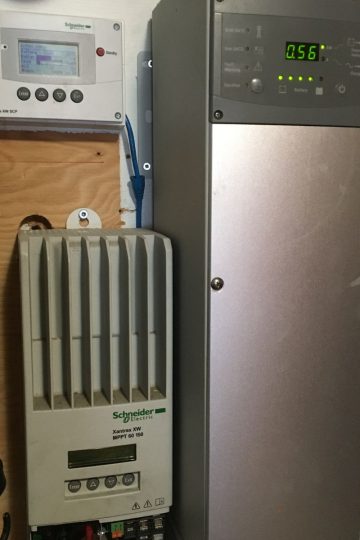
Battery storage helps cover the hours when your solar panels aren't producing power, but snow, clouds, short winter days, and shade can all reduce solar production. That means many off grid families still need a backup generator and should include its fuel, maintenance, and repairs in their budget.
And you know what else is expensive? Trying to buy a generator or even generator parts in a remote part of Canada!
Over the past few years, our off grid costs have included new glow plugs, fuel pumps and a new starter for one of the generators. Even buying them online, shipping costs can easily add $50 or more to the bill.
how to reduce generator repair costs
Finding ways to save money off the grid takes some creativity. Save money on generator costs in several ways:
- Learn how to carry out basic generator maintenance before you become dependent on a generator to charge the batteries of your off grid home.
- Learn to troubleshoot your generator. Knowing four or five things to check for when your generator wouldn't start could have saved a couple of $300 service calls out to our cabin.
- Sign up for an Amazon Prime account to save on shipping costs for off grid supplies like fuel pumps, water pumps, glow plugs, etc.
- You should also run a solar system stress test before winter so you know how long your batteries and backup generator can support your essential loads, which can help estimate the fuel cost.
Related: How Much Does it Cost to Move Off The Grid?
3. Diesel & Propane Off Grid Costs
If you're dreaming about moving off the grid to save money, you may want to think carefully about the cost of fuel for running your generator or heating system.
We do know of several households that depend solely on wood stoves for heating, even up here in Canada's Northwest Territories, where winter temperatures routinely hit -40 degrees Celsius.
Yet most families will have at least a portable generator, which requires either diesel or propane fuel. And fuel is one of the off grid costs that surprised us. Now, I knew we'd have to pay for diesel and propane, I just didn't realize how much it would be!
Part of the issue for us is that our home is kind of big and has an in-floor hot water heating system powered by a big old propane boiler. And it eats propane like crazy. Plus, the winters here are long, dark, and cold.
From about mid-October through mid-April, our propane bill averages about $1,100 monthly. Diesel for the generators adds another $200 per month.
On the upside, through the spring and summer months, we don't have any heating or hydro bills at all. And our off grid water system lets us pump our water up from the lake all year round for free.
how to estimate off grid fuel costs
If you're considering buying an off grid home that depends on diesel, propane, or gasoline to power generators or heating systems, ask the homeowner for copies of their bills. Especially winter bills.
This will give you an idea of your monthly off grid costs. If they're higher than you've budgeted for, research newer, more efficient equipment that could cut your fuel costs.
Canadian homeowners may qualify for interest-free financing through the Canada Greener Homes Loan for certain energy-efficiency upgrades. Check the current rules before you include any grant or loan in your budget.
4. Wood is Expensive Up Here
When we were dreaming about living off the grid, we knew we wanted a wood stove in our home. And while we knew that would mean that we would need firewood, we didn't really think much more about it.
I took a shot in the dark and budgeted $50 per month for firewood. Because I just assumed we (meaning my husband Dan) would chop most of the wood we'd need, and we'd only have to buy a couple of cords to get us through the winter.
Boy, was I wrong on several counts.
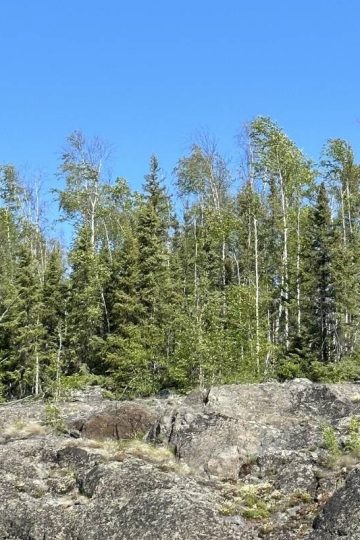
Firstly, we live about 457 kilometers (that's 284 miles) south of the Arctic Circle. Although we are below the Northwest Territories tree line, the trees around us, mostly white and black spruce, plus birch, are sparse and spindly.
Nothing like what we were used to when we lived down south in Ontario. Or Alberta. Or Manitoba. So good firewood is hard to find.
Secondly, we use far more wood than I was expecting. On average, we go through about nine cords of wood each winter. We run the wood stove 24/7 from mid-October through mid-April.
Thirdly, firewood is expensive in this area. Because it's hard to come by, area residents need a license to chop wood (it's free, but still), and then drive to one of the approved tree-cutting areas in the Territories.
Some of these are a two- to three-hour drive away, so there's the cost of gas. And 1 ½ cords was about the most we could fit in the bed of our Dodge Ram 2500.
While it's a fun family outing, it isn't cost-efficient between the cost of gas for the truck and the limited amount of wood we can haul.
We pay between $300 and $400 per cord for wood delivery. So according to my records, we spend about $3,200 per year on firewood.
how to budget for off grid firewood
Ask around! This is where online research just doesn't work. And this is why it's important to have a network of other people who live off the grid in the area you're moving to. They can tell you things like where the best woodlots are. Who will deliver firewood? Who has good wood?
Related: 6 Things I Never Said Before Moving Off The Grid
5. Shipping Costs to a Remote Location
We love living in a remote part of Canada. We love the fresh air, the clean water, the wildlife, and the off grid lifestyle. However, the distance from a major shopping area has its downsides. And one of those is the cost of getting goods shipped up to the north.
I simply had no idea how expensive it would be to send and receive parcels up here.
how to reduce remote shipping costs
Get a more accurate idea of shipping costs by inputting your off-grid property's ZIP code (or postal code for Canadians) into an online shopping site. This will give you an idea of shipping costs.
Only shop online at places that have free shipping. For example, Amazon (if you have a Prime membership), LL Bean, and Walmart ship free to our area.
Plan your purchases to avoid shipping altogether. For example, we recently spent a week in Edmonton, Alberta, about a 1455 kilometer (904 miles) drive south. Before we went we made a shopping list and brought our purchases home to avoid shipping charges.
The more you know about potential off grid costs, the less likely you'll be to face a budget crisis after your move. If you're still comparing properties, research cabin building permits and off grid land financing before deciding how much you can afford to spend. Ask for real bills, speak with local residents, check delivery costs, and get insurance quotes before buying. A little extra research now can save you thousands of dollars later.
Frequently Asked Questions About Off Grid Living Costs
The price of living off grid varies widely from one property to another. These answers will help you identify the costs that generic online estimates often miss.
How much does it cost to live off grid?
Your monthly cost depends on your mortgage, property taxes, insurance, fuel, climate, power system, water system, and distance from town. Some families save money, while others pay more because they need propane, generator fuel, firewood, repairs, and remote deliveries.
Is it cheaper to live off grid?
It can be cheaper after you pay for the land, home, solar system, batteries, water system, and septic or waste system. However, living off grid doesn't remove all monthly expenses. You may replace utility bills with fuel, maintenance, equipment replacement, and transportation costs.
What hidden costs should I expect when moving off grid?
Common surprises include higher insurance premiums, generator repairs, replacement batteries, fuel delivery, firewood, snow removal, road maintenance, well or water-pump repairs, and shipping charges. Research each expense for the specific property before you buy.
How much should I budget for off grid maintenance?
There's no single percentage that works for every off grid property. Start with a separate repair fund for your generator, batteries, inverter, water pump, heating equipment, vehicle, and access road. Base your first budget on the age and condition of the systems included with the property.
Does an off grid home require special insurance?
Many off grid homes can qualify for insurance, but the insurer may ask about electrical inspections, heating systems, fire protection, road access, and the distance to a fire department or water source. Get a written quote before making an offer on the property.
You might also like...



Thank you so much for sharing your experience. My wife and I are attempting to live off-grid and it's brought along so many challenges we didn't foresee. After a very snowy winter this past year, our fence desperately needed to be replaced. We decided to go with composite fencing which turned out great but was definitely an unexpected expense. Off-grid living definitely isn't as glamorous as you think!
My girlfriend and I have been living off the grid in a hunting cabin for the past 5 years. Solar array, propane utilities, and a gas generator is our sources of power. Our heat is wood stove.
Living off the grid is NOT cheap... and it's a lot of work!
Solar array is not cheap and needs more maintenance that we expected. First, we have to monitor the daily charge, check the batteries level periodically, and clean solar panels each time it snows. Also... not much charging of batteries when it's not sunny.
Batteries are not eternal. they will need to be replaced; having a lifespan between 10-15 years. Then solar panels, and inverter, and charge controller.
Our water heater and kitchen stove is powered with propane. That part is kinda simple to us. However, it's the hassle of transporting 100 pound tanks to be refilled every so many months.
Our heat is solely from a wood stove. Even though I own a hardwood forest... it's a lot of time and effort to cut trees, log it, stack it to let it dry, split it, then transport it to be stacked again for Winter.
Gas generators are expensive and needs constant maintenance. And they don't last for ever. We went through a few of them in 5 years. And... The price of gas also digs a hole in the budget. If there's no sun to charge your batteries you already know your generator will be running!
In all honesty...
If Hydro was available to my premises... I would convert in a heart beat!
Hello!" We recently found out about how hard it is to get insurance for an off-grid home. I was hoping you could share your insurance company or companies that you know that will insure off-grid homes in Canada? Would be greatly appreciated thank you!
Realistic and honest.
Thanks.
If you want to live off grid to the same standards as typical suburbanites then of course it will be more expensive. Consider insurance as an example. If you can obtain a home or build one with no financing, then who says you need any insurance? People did without it for thousands of years. Invest a fraction of the savings in fire suppression and alarms and pocket the rest. Consider personal liability insurance only for protection from lawsuits by people wandering onto your land. Wood and fuel costs should be researched beforehand. Insulate, keep it small and keep it simple. The point of going off grid isn't to bring a consumerist lifestyle with you. It takes much research and planning to transition into this life with both eyes wide open.
Hey everyone in the northern hemisphere I live in Victoria Australia, and I found during our cold winters, which is nothing like you guys, I’ve surrounded my tropical lime with a huge compost heap, supported it with poles, and wrapped it in cling wrap, then poured more compost around it, gave it a good feed and water, and the heat generated by the compost is amazing, thanking you Brian power
Thank you for bringing the insurance issue to my attention. That is the one thing I never even thought of being an issue. We will be living in the west central mountains of New Mexico USA about a 1 1/2 hour drive to St. John’s Arizona. Temperatures here vary all year, but mostly temperate, we can get above 100 deg. F. in summer & 14 deg F or so in winter. Not nearly as could as you are up north, but heating can be a problem as well. Most of the trees in our area are much smaller heights wise due to lack of consistent water. Wells are close to 580’ deep and drilling a well is about $50 to $75 per foot. So we will be hauling water from the municipal well in the closest town about an hours drive from our property. We do live in an area of very large ranches, so I hope we will be able to get permission to clear some of the dead trees from their ranches for free ( we have a real fire issue here due to not clearing out the dead trees and or brush out of the forests) hopefully!
You were also right about the cost of moving and living off grid. It makes everything more difficult and consumes more time for everything.
Thanks again for your insurance reminder.
Keeping you & your family in my prayers.
Theresa B.
Learned two things about running stuff. Smaller is typically better than big. Downsize your propane water heater, install low flow shower heads/aerators, never take hot water baths or let the water run. Believe it or not, dishwashers typically use less hot water than washing dishes by hand. Being prudent, our family of 4 easily gets by with a 30 gallon water tank, your 2 family home should be able to get by on a 20 gallon tank. Second insulate, insulate, insulate. Insulation is underrated Then weatherstrip and caulk. All three are cheap ways to cutting your energy needs. Besides that, your home will be much more comfortable. In our 4th year in what started as a very cold, wasteful home. Use about 1/2 the energy then when we started and home is more comfortable. Still finding ways to better insulate the home. Good luck
Good morning,
Your article was one of the most honest I have come across. Thank you for that. We also live in the Northern realm. We are modern homesteaders with much experience and we love to see and learn new ways of living this fantastic life.