
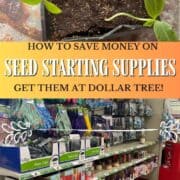
Whether you're a seasoned gardener or just starting out, Dollar Tree is the place for budget-friendly seed starter supplies. Let me walk you through what I discovered and how I used it to start indoor seedlings this year.

Table of Contents
Buying vegetable seeds at Dollar Tree
On a recent trip to Dollar Tree, I found two types of squash, cucumbers, tomatoes, spinach, herbs, beans, melons, pumpkin, beets, and various other seeds. They did have a lot of flowers, too; many were great companion plants for vegetable gardens.
I did a little research and discovered that the American Seed Company, which provides Dollar Tree with its seeds, is non-GMO and a part of Central Garden & Pet, which also produces Ferry Morris. The biggest drawback was that some of the seed packets contained very few seeds.
Seed starter supplies like planters and pots

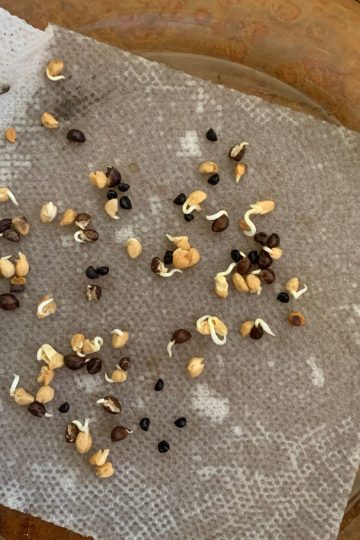
Now I do prefer the big 72-cell seed tray for large crops, like tomatoes and carrots. And we used one of these when we planted our black beans indoors last year. However, the variety of seed-starting pots here is fantastic, with a great price tag, too.
You can grab a 10-pack of natural-fiber seed-starting pots, stackable planters, terra cotta pots, hanging baskets, nursery pots, and drip trays. Perfect if you're getting into vertical gardening.
One of my favorite items was the seed-starting greenhouse, which is perfect for encouraging seed germination and offers enough room for 6-10 starts, depending on the seeds. Just the thing for gardening in a northern climate.
This doesn't even include stepping into other areas of the store and using items like the lidded cupcake carrier in a similar way to a greenhouse, or other items in storage and baskets. These could be used instead of or in addition to cold frame gardening.
Soil and fertilizer

Dollar stores like Dollar Tree may also carry potting mix during the spring. However, they're small - as in a 2 lb bag from American Seed.
The potting mix comprises sphagnum peat moss, professional grower 's-grade vermiculite, horticultural-grade perlite, and other ingredients. You might also find other seed starting supplies, such as blocks of organic expanding soil and plant spikes.
Now I have picked up bags from here that had large chunks of mulch in them. It does seem they've been carrying a much higher-quality soil this past year.
Gloves and Tools

I was also really surprised by the various materials and styles of gardening gloves, spades, hand rakes, kneeling pads, plant clips, watering cans, and plant labels. So if you're looking for gifts for gardeners, this could be a good choice.
Are they going to hold up as well as home improvement store items? I doubt it. That said, I have had a few tools from here for several years now that will take a little care but are in great shape.
Garden Decor

Check out the garden decor if you like your garden to feature some unique pieces. They have many cute items, some functional, like small fencing pieces, trellises, and solar lighting. We also saw garden gnomes, flags, stakes, and figures.
In our case, we prefer to DIY and upcycle what we can. We paint DIY planters and other garden projects from time to time.
Veggies to start indoors
If you're serious about starting seeds, you need to plan your garden beforehand. The best crops to start from seed indoors include:
- Cauliflower
- Eggplant
- Peppers
- Celery
- Tomatoes
- Broccoli
- Brussel Sprouts
- Cabbage
- Lettuces
- Cucumber
- Beets
- Eggplant
- Corn
Start your vegetable seeds indoors about 4 to 5 weeks before the last frost date in your area.
How to start seeds with Dollar Tree
Learning to sprout seeds indoors is easy. I sprouted several different kinds of seeds, and the total cost was $ 11.25 plus tax. You know, this is a really inexpensive way to get started with a small kitchen garden.
Remember that you can reuse the greenhouses, and you will have some leftover soil and seeds. Of course, you may already have compost, soil, and pots you want to use, which will bring your cost down even further.
You Will Need
- 4 packs of seeds
- 4 seed-starting greenhouses
- 1 bag of soil
Directions for Seed Starting
Poke small holes in the bottom of the black tray first for drainage. Next, moisten and mix the soil well to be sure all the soil is damp.
Tip: When starting a lot of seeds, I like to mix up a bunch in a larger container like an old roasting pan.
Fill the trays completely with the moistened soil loosely; don't pack it down. Then use the eraser end of a pencil to make the holes for your seeds. The general rule of thumb is to plant seeds at a depth equal to two or three times their width.
Plant seeds and lightly cover with soil.
Replace the greenhouse lid and set it in a sunny window or under grow lights.
Watch for sprouts
Within a few days, you should start seeing tiny sprouts. I only needed to spritz with water after a few days until the sprouts started, then I began to water to keep the soil damp.
I would say I saw at least an 80% germination rate from the seeds we got at Dollar Tree. Once the first leaves appear, you can remove the greenhouse lid.
Generally, when your seedling has three to four true leaves, it is ready to begin hardening off. You should start this hardening-off process about 1 to 2 weeks before you are ready to plant in your garden.
How to harden off your seedlings
To harden off your plants, take your trays outside on a warm day, above 7 degrees C (45 degrees ℉). Keep them out of direct wind and sunlight for about an hour on the first day.
Add another hour of time each day before you bring them back in. After about three days, you can begin exposing them to more direct sunlight, increasing each day for about a week.
As long as temperatures are above 10 degrees C or 50 degrees F day and night, they can stay out for the next few days around the clock. Now they are ready to be transplanted into your backyard garden bed or container.
That's it!
Looking for a Dollar Tree to find seed starting supplies in your area? Use this store locator if you're in Canada.
And if you are in the United States, use this store locator. Yes, you can also shop online.
Happy planting!
Like this post? Save it, share it, and read it!


Such great tips! As food prices skyrocket, I'm hearing many more friends talk about planting a vegetable garden this season—whether it's a container garden on the patio or a larger effort in the backyard. I've already shared this article with several of them!