If you want to buy raw land for an off-grid home, expect a bigger down payment, stricter lender questions, and more paperwork than you would face with a regular house. In 2026, many land buyers will still need 20% to 35% down, strong credit, steady income, and a clear plan for access, water, waste, and power before a lender will say yes. Recent Canadian and U.S. data also show why land buyers need a careful plan: Farm Credit Canada reports average Canadian farmland values rose 9.3% in 2025. And the USDA reports U.S. farm real estate values averaged $4,350 per acre in 2025, up 4.3% from 2024.
I know this part can feel big. I remember, it's so exciting when you first start looking. Then the off grid land financing side hits, and it can feel like someone moved the goalposts.
We financed our off grid property in 2013 and paid it off by 2018. Now, that doesn't mean every lender will say yes, nor does it mean the process is easy. True, I did have over 12 years of experience in banking, and I'd run into the issues of financing off grid properties from the lender side.
The good news is you can do this. Off grid land financing is possible when you understand what lenders want, and you build your plan one step at a time.
Table of Contents
Quick answer: how off grid land financing works
Traditional mortgages often fail on raw land because there's no finished house for the lender to use as simple collateral. That's why many buyers turn to raw land loans, improved land loans, seller financing, farm credit, or a construction-to-permanent loan.
In both Canada and the U.S., lenders usually want to see that the property is legal to use the way you plan, reachable year-round, and realistic as a future off grid home or working homestead. According to the Consumer Financial Protection Bureau, the U.S. rules also draw a clear line between vacant land and loans tied to building on that land, which is one reason many lenders ask detailed questions about your build timeline.
Why traditional mortgages fail for off-grid land
A regular home mortgage works best when a property looks familiar to the lender. The house has a standard address, normal resale value, utility hookups, a known market, and a clear list of comparable sales.
Raw land is different.
With unimproved land, the lender sees more risk. The lot may not have road access. It may not have hydro, gas, city water, or sewer. It may need a new survey.
The zoning may not allow a full-time dwelling, a second structure, livestock, or short-term rentals. If the lender ever needs to resell the land, that sale may take longer and attract fewer buyers.
That's why many banks say no to financing off-grid land even when they like you as a borrower. They're not just judging your income. They're judging the land itself.
Here is the simplest way to think about it.
Off Grid Land Financing Options and Risks
| Loan type | Typical use | Common down payment | Common term | Main lender concern |
|---|---|---|---|---|
| Traditional mortgage | Finished home | 5% to 20% | Up to 25 to 30 years | resale value of house |
| Raw land loan | Unimproved parcel | 20% to 50% | 5 to 15 years | access, zoning, resale risk |
| Improved land loan | Land with road or some services | 20% to 35% | 10 to 20 years | future build potential |
| Seller financing | Private agreement with owner | Varies | Varies | contract terms and legal protection |
| Construction-to-permanent | Build soon, then convert | Often 20%+ | construction term then mortgage | budget, plans, permits |
Table provided by Sarita Harbour, An Off Grid Life
If you remember one thing, remember this: a lender does not finance your dream. A lender finances risk.
The best ways to finance off grid property in 2026
1. Raw Land loans
A raw land loan is the most obvious option when you're buying bare land with few or no services. These loans can work, but they often come with higher down payments, shorter terms, and higher rates than a standard home mortgage.
This route can make sense if you've found the right piece of land and you already have cash saved to move off the grid. It also helps if you can show a long-term plan for improving the property.
Lenders often look at:
- zoning
- deeded access
- lot size
- topography
- flood risk
- nearby comparable sales
- your credit score
- your income
- your future building plan
If the parcel is very remote, heavily treed, swampy, landlocked, or hard to insure, approval can get harder fast. Believe me, I know, both as a lender and as the owner of an off grid property in an extremely remote area.
2. Improved land loans
Improved land usually means the parcel already has some signs of readiness. That might include legal road access, a driveway, a well, hydro nearby, septic work, or a prior building site.
This doesn't mean the land is easy to finance, but it often gives a lender more comfort. The more usable and legal the land looks, the more likely you are to get a better answer.
This is one reason I always tell readers to start with the land itself before you start dreaming about off grid cabins and greenhouses. A beautiful parcel of land with poor access or unclear zoning can turn into an expensive lesson. And that's also why my posts like how to find homestead land and off grid homes: how to pick the right one matter so much in the early stage.
3. Seller financing
Have you ever heard of a vendor-take-back mortgage? This is also known as seller financing. And seller financing can be a hidden gem for off-grid buyers.
In a seller-financed deal, the landowner agrees to let you pay over time instead of requiring a full payment from a bank loan on closing day. This can open the door to moving off the grid when banks don't understand your property or your plan.
You will still need a lawyer. You'll also still need a solid contract. And you'll need to protect yourself.
But seller financing can work well when:
- the seller owns the land outright
- the seller wants steady income
- the parcel is hard to finance through a bank
- you have a decent down payment but not enough for a strict land lender
Make sure the agreement spells out:
- purchase price
- interest rate
- payment schedule
- late fees
- default terms
- title transfer terms
- taxes
- insurance
- who handles legal costs
4. Construction-to-permanent financing
This path can work if you plan to build soon, not someday. When we were looking for land to build our retirement off grid homestead, we considered this. (But not for long.)
A construction-to-permanent loan starts with the build phase and later rolls into a regular mortgage structure. It's important to note that, as per the CFPB, U.S. rules treat loans connected to building on vacant land differently than simple vacant-land financing, which is part of the reason why lenders want to see construction plans, timelines, and budgets early.
This option can make sense if you already have:
- house plans
- permits in progress
- contractor quotes or a clear owner-build plan
- a realistic timeline
- enough cash for overruns
5. Farm credit and agricultural loan programs
If your land purchase connects to real farm or homestead use, don't skip this path.
In Canada, Farm Credit Canada remains one of the key lenders to watch for farmland and agricultural purchases, especially in a market where land values continue to climb. FCC reported that while the average Canadian farmland value increased in 2025, Manitoba recorded the highest farmland value increase at 12.2%, followed by Alberta at 11.4% and Saskatchewan at 9.4%.
I'm not too surprised. We've traveled extensively across the prairies in our off grid renovated camper, and there are some absolutely beautiful parcels of off grid land, farmland, and places that could support a large off grid homestead family compound.
In the U.S., USDA's Farm Service Agency says its Farm Ownership loans can help provide access to land and capital, and its guaranteed farm loans can help borrowers obtain loans from approved commercial lenders. USDA also notes that beginning farmers and ranchers may qualify for targeted programs.
The FSA lists a direct farm ownership maximum loan amount of $600,000, with separate limits for the beginning farmer down payment program. If you plan to raise livestock, grow food, or build income from the land, it is worth asking whether your use fits an agricultural lending path.
Off grid land financing Ontario: what buyers need to know
If you are buying land in Ontario, you need to slow down and check local details before you fall in love with a listing.
Ontario buyers should pay close attention to:
- township zoning
- building permit rules
- private road access
- severance restrictions
- conservation authority limits
- well and septic requirements
- winter road conditions
- hydro distance and hookup costs
Some parcels look cheap because they come with hidden costs or hidden limits. The ad may say "perfect for a cabin" while the zoning says something very different. Make sure you do your research carefully.
Questions to Ask Before Buying Land in Ontario
If your long-term goal is a full off-grid home, ask the township these questions before you make an offer:
- Is this an organized or unorganized township?
- Can I build a year-round dwelling here?
- What are the setback rules?
- Are there minimum square footage rules?
- Can I install a solar panel system?
- Can I drill a well or use another approved water source?
- What sewage options are allowed?
- Is there year-round legal access?
- Are there restrictions on trailers, bunkies, livestock, or second structures?
That one call can save you months of stress.
And while rebates don't solve land financing, they can matter later when you move from raw land to an off-grid build. Ontario's Home Renovation Savings program says eligible homeowners can receive up to $5,000 for solar panels. You can receive up to $5,000 for battery storage. The program also notes these incentives are for homes connected to Ontario's electricity grid, so they're not a fit for every off-grid setup.
I'm studying this carefully right now, as we make plans for our property in northwestern Ontario. It's a completely different setup than what we have at our off grid home in the Northwest Territories, which doesn't even have the option to tie into the grid.
What lenders want to see before they approve you
This is where many buyers get stuck. They focus on the asking price and the monthly payment, but the lender wants a fuller picture. Remember, lenders are in business to make money, and they prefer to lend to low-risk buyers.
Here's the checklist I wish more people used before applying.
Off Grid Land Financing Approval Checklist
- Zoning verification: confirm the land allows your planned use
- Road access: prove the parcel is reachable year-round
- Survey: get a current survey or review an existing one
- Appraisal: most lenders will want a professional land appraisal (and house appraisal if applicable)
- Proof of income: have recent tax returns, pay stubs, and bank statements ready
- Credit history: fix errors before you apply
- Debt picture: keep your debt load manageable
- Site plan: explain how you will handle water, waste, heat, and power
- Build timeline: even a rough timeline helps
- Cash reserves: show that you can handle closing costs and early land expenses
If you are still at the dream stage, spend time on these basics first. It's a much better use of your energy than browsing pretty cabin photos for another month.
While you build your plan, it also helps to read Off-Grid Living for Beginners, How We Live Off the Grid, and What Living Off the Grid Really Means. These posts give context that lenders never will.
Hidden costs that catch new buyers off guard
When it comes to getting financing for off grid land, the purchase price is only the first number.
Many land buyers also pay for:
- survey updates
- appraisal fees
- legal fees
- title insurance
- land transfer tax
- mortgage setup fees
- driveway work
- culverts
- tree clearing
- septic design
- drilling a well
- temporary shelter
- storage
- tool purchases
- insurance
- property tax
Don't forget the cost of proving the land is usable. Sometimes that means paying for studies, reports, or site work before you feel ready.
This is also why off-grid systems matter earlier than many buyers think. Lenders may ask how you'll manage daily life on the property. Clear answers about your water setup, off grid toilets, and heating plans can strengthen your overall file because they show you are thinking like a homeowner, not just a shopper.
Simple starter calculator for off grid land financing
You don't need a fancy spreadsheet to run your first numbers. Start here instead.
Off Grid Land Financing Cash-Needed Worksheet
| Item | Your amount |
|---|---|
| Purchase price | |
| Down payment % | |
| Down payment $ | |
| Loan amount | |
| Estimated closing costs | |
| Survey | |
| Appraisal | |
| Legal fees | |
| Title insurance | |
| Site prep reserve | |
| Emergency buffer | |
| Total cash needed before move-in |
How to use The off grid finance worksheet
Take the purchase price and multiply it by your expected down payment percentage rate. Then add your closing costs, legal fees, survey, appraisal, and an honest site prep reserve.
For example, if a parcel costs $180,000 and your lender wants 25% down, you need $45,000 just for the down payment. That's an important fact to note. Most off grid financing requires a solid down payment to offset the higher risk for the lender.
Add even modest closing and setup costs, and your real cash needs can climb much higher. Something like a new survey, for example, can cost more than you expect. This is where many families realize they need to save longer, buy a smaller parcel of land, or look harder at seller financing.
Our real-world case study
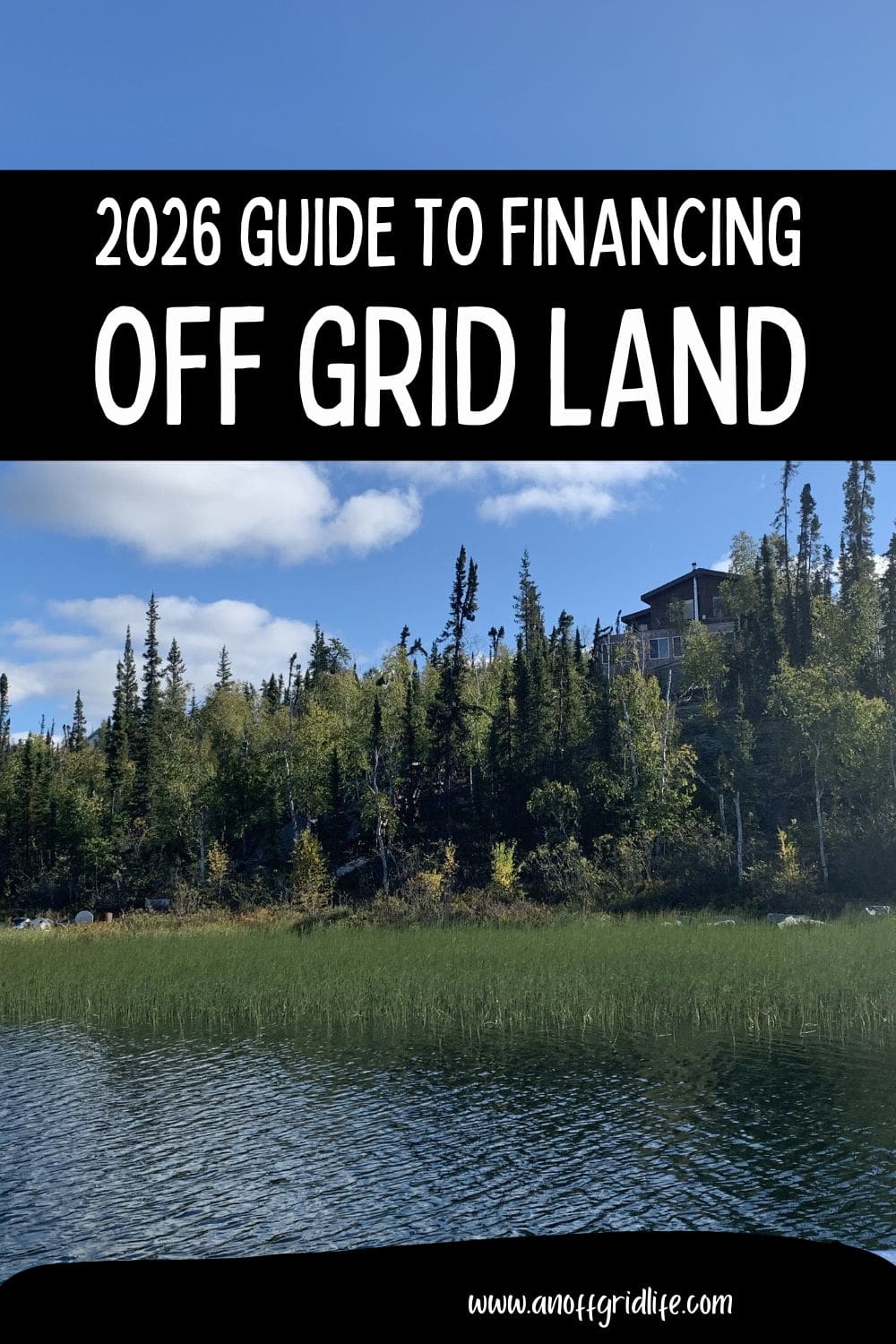
When we bought our off-grid home in 2013, we did secure financing. We were buying in an area where there were many off grid properties. To make it even more complicated, most of these properties were on leased land, land that is owned by the local indigenous groups.
I knew that our best bet was to deal with a local branch of a national lender. Working with a local lender meant a local person who was familiar with the ins and outs of financing off grid properties would be handling our application, instead of a city banker who wasn't used to this sort of mortgage.
Because we bought an existing off grid home (it was built in the 1980s) and had a substantial down payment, excellent credit and a long employment history, we qualified for the mortgage without issue.
An appraiser came out to assess the value, and we arranged for homeowner's insurance. Now that was a headache and a half. I'll write another post about getting insurance on an off grid home.
Anyways,we paid the mortgage off by 2018. That result didn't come from luck alone. It came from having a practical plan and staying focused on saving money where we could.
What worked for us
When we first bought our off grid property, I had to think like a lender again. Luckily, it was easy to show the property could work as a home because it had been a full-time home for over 30 years.
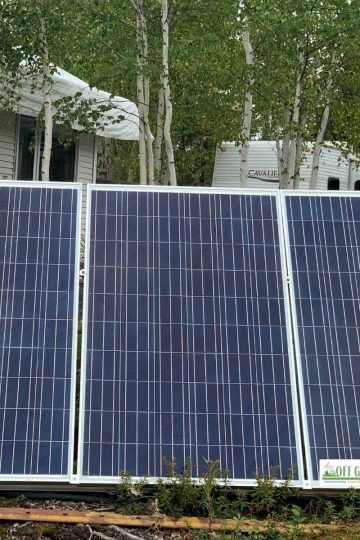
It was easy to talk clearly about habitability. How would we handle power (solar panels, inverter, and two backup diesel generators.) Where the water would come from (we pump it from the lake behind the house.)
What we would we do for sewage (we have a large tank that gets emptied twice a year.) And how would we live there and heat the house in a real Canadian winter (the house is heated with a propane boiler, in-floor heating and a massive wood stove.)
Get a local lender
Once again, the fact that we had a local lender and a local appraiser who were very familiar with the features of off grid properties made the whole process easier. If you're from an urban or suburban area and you're looking to finance off grid land in a rural or remote area, I strongly recommend you get a local lender and appraiser.
If you're trying to finance off grid land now, don't walk into your first finance meeting sounding vague. Walk in with a binder or a digital folder.
Show your income. Show your savings. Show the land details. Show your rough plan for shelter, water, sanitation, and access. Show that you understand the work ahead.
Lenders may still say no. But you'll give yourself a much better shot.
And once you own the land, keep your expectations steady. Off-grid life comes with a learning curve. Posts like off grid living mistakes and homesteading basics can help you avoid expensive early missteps.
Common mistakes new buyers make
After buying our first off grid property and looking at many, many other parcels of land, I can think of several mistakes we made. But one of the te biggest mistakes is buying land before checking whether it will support the life you want.
We have about an acre of land in the Northwest Territories. At the time, we were more interested in the house itself rather than looking ahead to how we would use the land. That was, of course, long before the pandemic and the various political and world issues that are coming to a head now.
Once we started with chickens (ended up with forty), turkeys and a large vegetable garden, we realized the land we had didn't support what we wanted to do. Most of it is bedrock anyway. That's why we're focusing on the forty acres in northern Ontario now.
If you're looking at land only, avoid making these common mistakes:
- assuming a bank will treat raw land like a house lot
- underestimating the down payment
- forgetting about legal access
- not checking local bylaws
- skipping the survey
- ignoring site prep costs
- buying too much acreage too soon
- rushing because a listing feels urgent
Remember, you don't need a perfect property to start. You do need a workable one.
Frequently asked questions about off grid land financing
Here are some of the most commonly asked questions about getting financing to buy off grid land. If your question isn't covered here, just leave a comment and I will do my best to answer it.
Can I get a traditional mortgage for raw off-grid land?
Usually not in the same way you would finance a regular house. Raw land often needs a land loan, seller financing, or a future construction plan.
What down payment do I need for off grid land financing?
Many buyers should expect 20% to 35%, though some parcels or lenders may require more. It depends on the lender, the region, the underwriting requirements, and the strength of your application (credit score, income, etc.)
Is seller financing safe?
It can be, but only with a strong legal agreement and proper due diligence. Keep in mind that seller financing, like getting a private lender, could come at a higher interest rate than a traditional lender might offer.
What makes land easier to finance?
Year-round road access, clear zoning, a survey, a realistic build plan, and some level of improvement on the property can all help make it easier to get financing.
Can homesteaders use agricultural lending programs?
Sometimes, yes. In the U.S., USDA Farm Service Agency programs can help eligible beginning farmers and ranchers access land and capital, including through direct and guaranteed farm ownership loans.
Do rebates help with off-grid land financing in Ontario?
Not with buying the land itself. But they may help later with eligible energy upgrades. Ontario's Home Renovation Savings program currently lists solar and battery storage rebates, though program rules limit eligibility and are aimed at homes connected to Ontario's grid.
Financing off grid land is challenging but possible
Off grid land financing isn't simple, but it is not out of reach either.
Start with the basics. Check zoning. Confirm access. Run the real numbers. Ask better questions. Build a plan that makes sense on paper before you try to live it in real life. You don't need to know everything yet. You just need to start in the right order.
If you want the bigger picture before you buy, read the Off Grid Living for Beginners pillar page next. It will help you connect the land purchase to the life you actually want to build.