

Saving tomato seeds can be a little different than saving seeds from other plants. First, you need to make sure you're saving seeds from the proper type of tomato.
Secondly, you have to follow a simple process to remove the gelatinous sac protecting each seed and ensure they're properly dried. But if you conduct all these steps properly, you'll be growing the same perfect tomatoes year after year.
To learn more, follow these tips on how to save tomato seeds for next year.
Estimated reading time: 4 minutes

Make Sure You Have The Right Seeds
If you bought your tomatoes at a supermarket, there's a chance you won't be able to use their seeds next season. So if you're serious about growing your own food to feed your family, consider buying heirloom seeds to start.
Most store-bought varieties of tomatoes are F1 Hybrid strains. This means they produce genetically unstable seeds, and won't share many of the characteristics of the previous plant.
Essentially, you don't want to grow saved seeds from an F1 Hybrid strain. It will be a lot of work for a disappointing harvest.
That said, my mom and grandmother have experimented with growing seeds from regular grocery store tomatoes. And every now and then, one grows into a plant. This seems to work best with cherry tomatoes or grape tomatoes.
To get some worth saving, you want to use seeds from an open-pollination or heirloom strain. These varieties have often been saved over multiple generations and decades, keeping the same standard characteristics expected in a tomato plant.
Tip: Seed saving is a great family activity. If you have kids at home, turn this into a learning experience. Choose an age-appropriate book about seeds for kids to read together before drying your tomato seeds for next year.
If you're using one of your own open-pollination tomatoes to save seeds, use the healthiest looking fruits. This will give you the best genetics for your future tomato plants.
If you don't have an existing strain of your own, you can purchase heirloom seeds online from various online sources. Also, you can ask a neighbor or friend for some seeds from their heirloom tomatoes to get your own started.
How to Remove Tomato Seeds

How to Save Tomato Seeds to Plant For Next Year
Use these steps to properly remove and clean seeds from your tomatoes.
Instructions
- Separate them from the fruit. Slice the tomato horizontally, so the stem is on top. Scoop the seeds out into a bowl or mason jar.
- Add a bit of water to the vessel to help with the fermentation process. The purpose of this step is to separate the seeds from the gelatinous sac that protects them.
- Place the jar in a warm spot and let it sit for 2 - 3 days, or until a moldy film forms on top.
- Once a thick moldy film forms on top, you’re ready to start separating the seeds. By this point, the seeds will have settled to the bottom, free of their sac.
- Scoop the moldy film off the top and dispose of it.
- Using a colander or fine-mesh sieve, rinse off the remaining seeds. Give them a thorough wash to remove any remaining bacteria or tomato flesh.
Recommended Products
As an Amazon Associate and member of other affiliate programs, I earn from qualifying purchases.
-
 GardenMate 6 x 33 feet Sheet Woven Weed Control Fabric - UV stabilized Black Heavy Duty 3 oz/yd² Landscape Ground Cover Membrane
 -
GardenMate 6 x 33 feet Sheet Woven Weed Control Fabric - UV stabilized Black Heavy Duty 3 oz/yd² Landscape Ground Cover Membrane
-
ESOW Garden Tool Set, 3 Piece Cast-Aluminum Heavy Duty Gardening Kit Includes Hand Trowel, Transplant Trowel and Cultivator Hand Rake with Soft Rubberized Non-Slip Ergonomic Handle, Garden Gifts
-
GardenMate 6 x 33 feet Sheet Woven Weed Control Fabric - UV stabilized Black Heavy Duty 3 oz/yd² Landscape Ground Cover Membrane
To learn more about using fermentation to separate seeds from fruits and vegetables, read more at Lee Valley.
Drying The Seeds
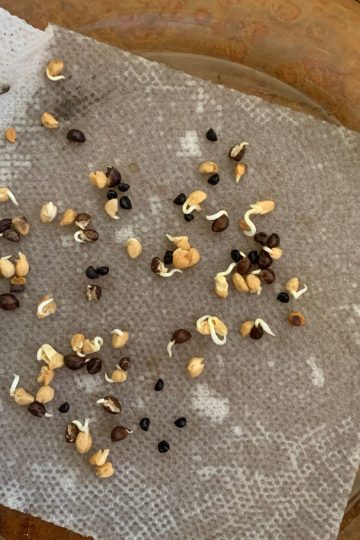
Properly drying the seeds means they will still be usable many years from now. Once you have rinsed the seeds, spread them out on a paper plate.
You can use paper towels or napkins, but the porous material means the seeds will stick and be difficult to remove. Make sure you spread the seeds out so they dry evenly and do not clump.
Storing The Seeds
Let the seeds naturally dry for about a week or so, until completely dry. Once dried, place them in a paper envelope and store them in a dry, dark place.
You can also store them in an airtight vessel like a mason jar. Whatever you use, make sure you label it properly so you remember next year.
Learning how to save tomato seeds for next year will keep your backyard garden abundant year after year. By selecting the best seeds from the best plants every year, you're starting your very own unique lineage. Some families have kept seeds going for decades, through multiple generations.
Save as many seeds as you can every year, and pass them on to friends and family. Also, if you're growing tomatoes in your kitchen garden, you likely have other plants growing as well.
You can use some of the same techniques mentioned here for saving seeds from all plants. Start your own little seed storage area, and keep it stocked every year for the same great garden!
Are you interested in learning more about off-grid and sustainable gardening practices? Read more below.
LIKE THIS POST? SAVE IT TO YOUR FAVORITE PINTEREST BOARD FOR LATER.



Hi Rachel!
Thanks for your comment. You know, I just don't know the answer to this. I *think that as long as the seeds aren't rotting, it's worth trying it - even if the tomato is overripe or underripe. Give it a shot - then come back and let us know how it worked out. 🙂
Thank you for these instructions! Is it okay if the seeds come from overripe tomatoes? Or even under ripe?